- politics
- world
Netanyahu Falls Short as Eisenkot Seeks a Way to Govern
Netanyahu’s bloc won 53 of 120 Knesset seats, below the 61-seat majority threshold. Opposition leader Gadi Eisenkot’s bloc won 48; Arab-led parties hold 19. Eisenkot seeks a broad government and support for key laws. On November 4, President Isaac Herzog asks Netanyahu to form a government; another candidate follows if he fails.
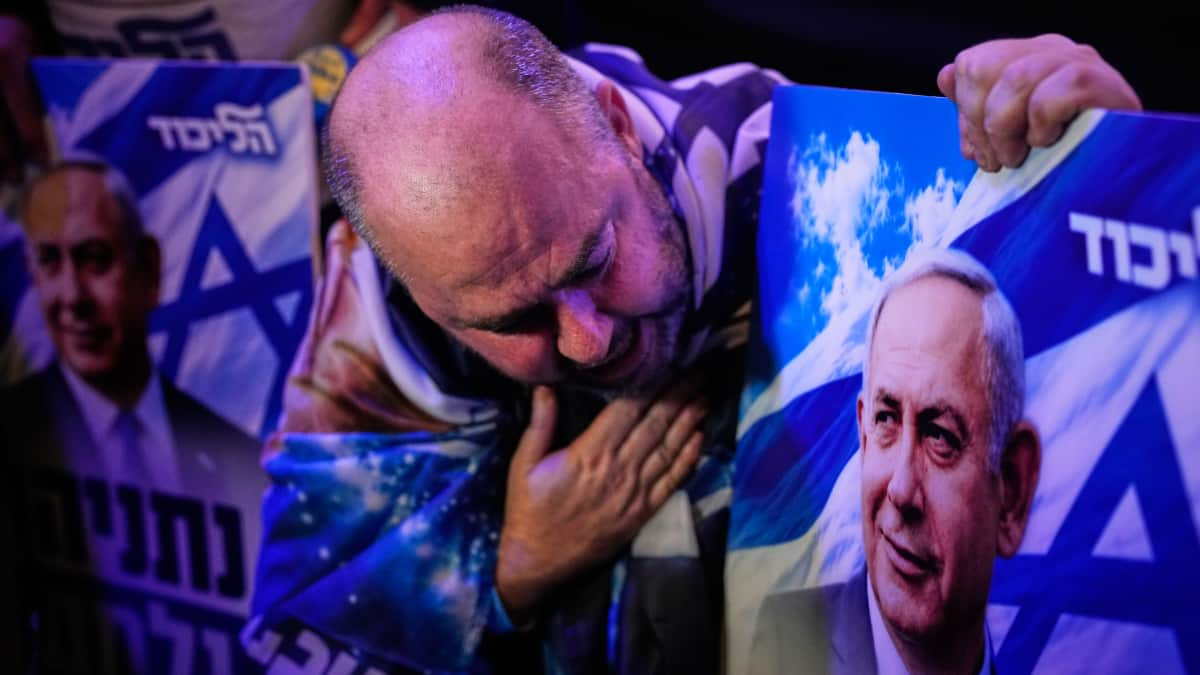
Netanyahu’s bloc won 53 of the Knesset’s 120 seats, but that was not enough to keep Israel’s prime minister in power alone. Opposition leader Gadi Eisenkot’s bloc won 48, while Arab-led parties took 19. Neither main camp has the 61 seats needed for a majority, leaving the country facing talks over who can govern and on what terms.12
Those 53 seats came from Tuesday’s election, which left both blocs short of a clear path to power. Eisenkot says he wants the broadest possible government and is setting out conditions for potential partners, including support for compulsory service and recognition of Israel as a Jewish, democratic state. He also wants a state investigation into the October 7 attack and the repeal of the current government’s laws overhauling the courts.12 Israel’s voting system usually sends multiple parties into parliament, so governments are built through coalitions rather than won by one party outright.
The 19 Arab-party seats could determine whether an anti-Netanyahu government is possible, but cooperation is politically difficult. Eisenkot’s conditions may be hard for Arab parties to accept, and some parties in his own bloc have opposed joining a government with them.24 Eisenkot says he can seek parliamentary support for laws without necessarily bringing Arab parties into his government. That distinction matters: even if he cannot form a stable coalition, he may be able to gather votes for an investigation, compulsory service or repeal of the court changes.1
Those votes would still face the test of a divided parliament, and the choice of partners could shape what the next government can do. Other options include a unity government with Netanyahu or a minority government relying on outside support, though each carries political costs.34 President Isaac Herzog is due to receive the final official election results on November 4. Under the process described in the reports, he first asks Netanyahu, the leader of the largest party, to try to form a government. If that fails, another candidate gets a chance.35
Questions about this story
Why do Israeli governments usually need coalition partners?▾
Israel elects its Knesset through proportional representation, so seats are divided among multiple parties. No party has won a majority alone in a national election, making coalition governments the usual route to power.
What role could Arab parties play in government formation?▾
What happens if no candidate forms a government?▾
After the first candidate’s attempt, another candidate can receive a chance, followed by a third. If no government is formed through that process, fresh elections may be called.3
Sources (5)
- 1
Israel's Eisenkot vows to form broad gov't, use parliamentary majority to advance legislationglobal.chinadaily.com.cn
- 2
Eisenkot vows to build broad coalition to avert fresh Israeli electiontrtworld.com
- 3
Netanyahu falls short. What's next for Israel, what it means for Indiaindiatoday.in
- 4
Netanyahu won 53 seats on anti-Arab sentiment. The real unity bloc was Arab partiestheprint.in
- 5
Israel elections: Anti-Netanyahu bloc weighs direct PM election bill to break political deadlocktimesofindia.indiatimes.com
1 minute read.