How Do I Reduce Startup Time of Heavy Pods in K8s? 🤯
If you've worked with Kubernetes for a while and tried spinning up pods with heavy images, you've probably hit this: a pod that takes minutes to reach Running. And then the obvious question follows.
How can I get the pods to start up early and reduce the time it currently takes from minutes to some seconds?
If you've ever asked that, you're not alone. I worked on exactly this problem and want to share the journey — the options I found, and the trade-offs that ruled each one in or out — while building an image-caching solution for heavy pods on EKS that eventually brought pull time down from minutes to a few seconds.
The stack this covers: an EKS cluster, ECR as the registry, Karpenter as the cluster autoscaler, the Helm and kubectl CLIs, and k9s for watching it all happen.
Here are the four options I evaluated, in the order I found them — and why I did or didn't go with each one.
ECR Pull Through Cache
The first solution I came across, and a natural one given this stack already pulls images from ECR: Pull Through Cache lets you pull from a registry in the same AWS region instead of reaching out to the public internet directly. Images get cached automatically into ECR repositories whenever the upstream public images update.
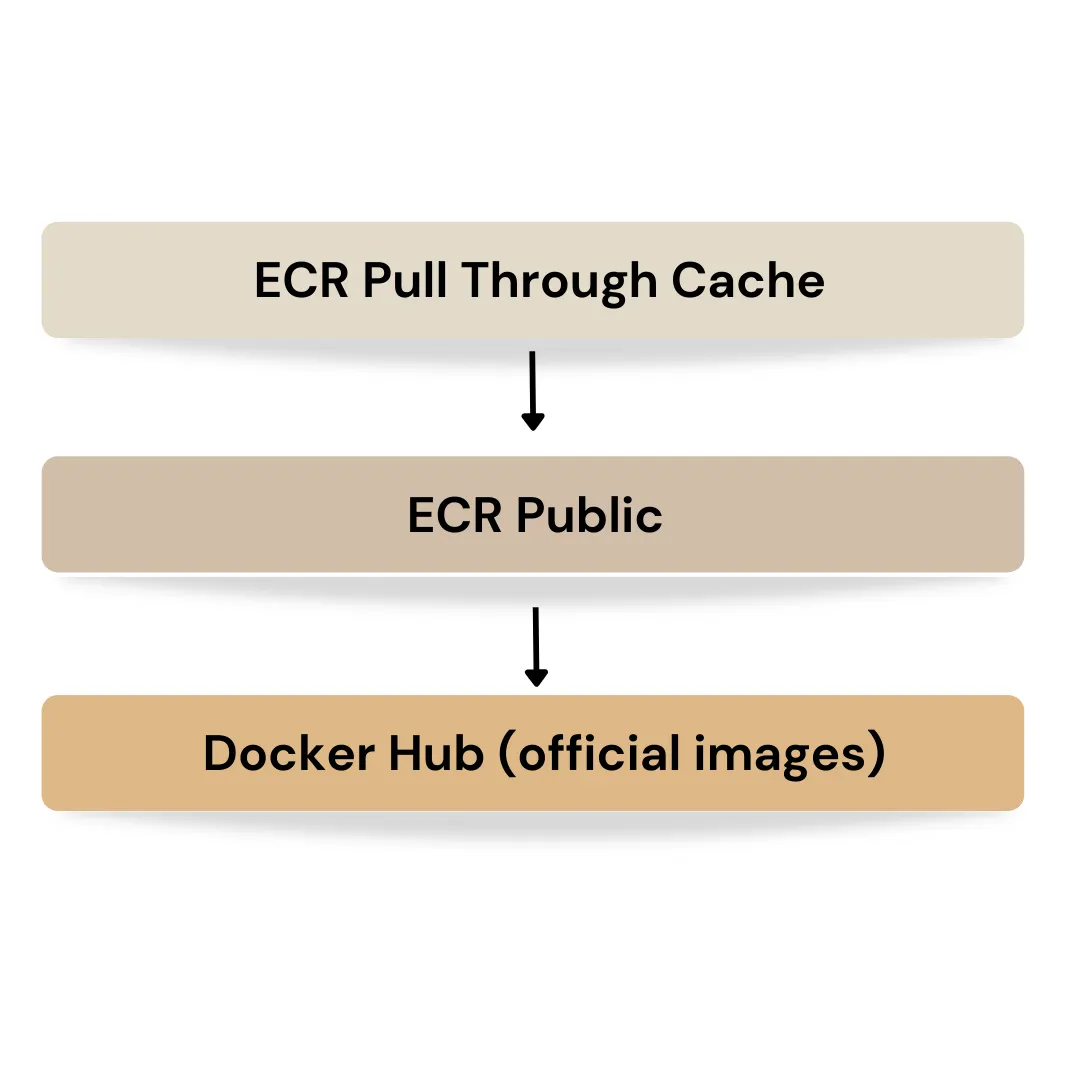
Verdict: it's a good technique for cutting cross-region latency, but it doesn't actually solve the problem I was trying to solve — the image still has to be pulled onto the node the first time a pod lands there. Skip it for this specific problem.
eStargz
The Stargz Snapshotter community built a lazy-pulling technique where a container can start running before the image finishes pulling — only the chunks it actually needs get fetched on demand. eStargz is the lazily-pullable image format that project proposes.
Verdict: an innovative idea, but it requires converting every existing image into the eStargz format. That conversion requirement was a deal-breaker for me personally, so I had to give this one up.
Spegel, kube-fledged
I learned about Spegel and kube-fledged from a great Discord community — a shoutout to them 📣. Spegel is a stateless application deployed as a DaemonSet on every node in the cluster; instances forward image-pull requests to each other, so a node can pull a cached layer from a peer node instead of the registry.
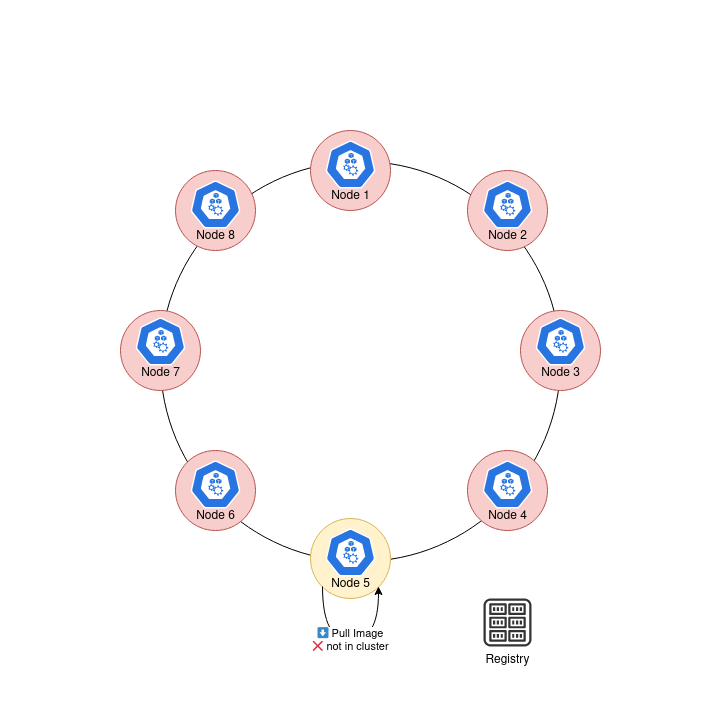
Verdict: both Spegel and kube-fledged looked promising, but I decided not to pick either one — the repositories didn't have enough active maintainers behind them for me to be comfortable depending on them.
AWS Bottlerocket OS + Karpenter
Bottlerocket is an OS AWS built specifically for running EKS workloads. What makes it useful here is that it ships with two separate volumes: a Root volume for OS data, and a Data volume for images and ephemeral storage.
The idea: provision a node on Bottlerocket, pull the heavy images onto it, take a snapshot of the Data volume, then point Karpenter at a custom AMI backed by that snapshot — so every new node Karpenter spins up already has the heavy images baked in, no pull required.
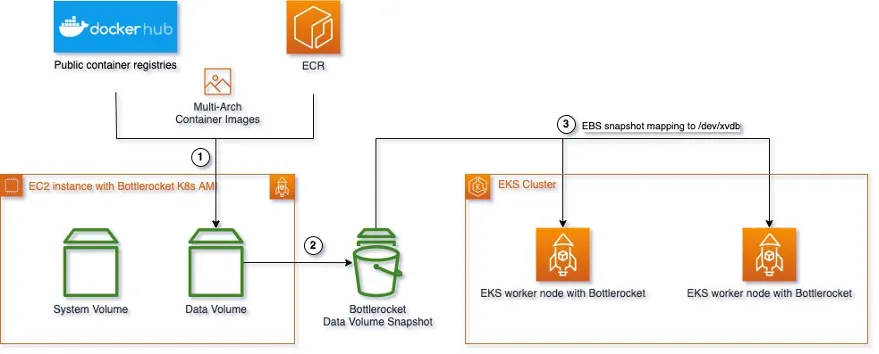
Verdict: this one actually solves the problem — no lazy pulling, no format conversion, no dependency on a thinly maintained project. The caveat is that building and maintaining that custom snapshot pipeline is genuinely time-consuming ⏰, which is the trade-off to weigh against the minutes it saves on every pod startup.
Where this leaves the decision
- ECR Pull Through Cache: real latency win, doesn't touch the actual startup-time problem.
- eStargz: solves it in principle, blocked by the cost of converting every image to its format.
- Spegel / kube-fledged: solves it in principle, blocked by maintainer risk on the underlying projects.
- Bottlerocket OS + Karpenter: the one that actually delivers minutes → seconds, at the cost of the upfront engineering time to build and maintain the snapshot pipeline.
Of the four, Bottlerocket + Karpenter is the one that actually closes the gap — the rest either don't solve the real problem or carry a dependency risk I wasn't willing to take on. The honest trade-off to go in with is time: it's the only option here that isn't a quick flip of a setting, it's infrastructure you build and own.
Written by Shubham Jain, Cloud Engineer at Newspresso Tech.
More posts
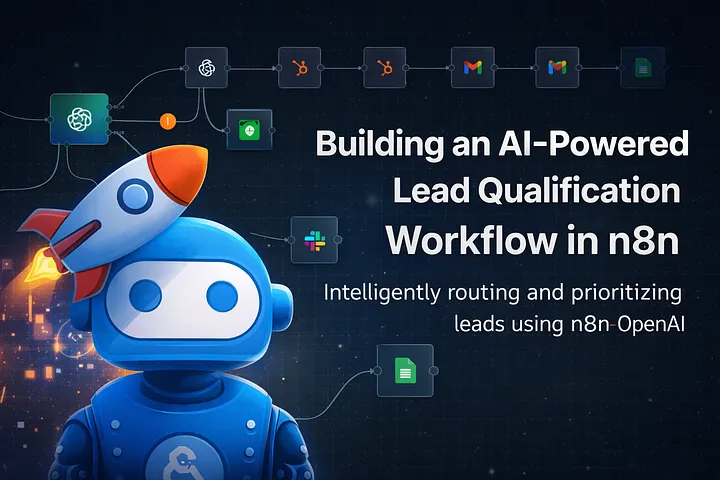
How I Built an AI-Powered Lead Qualification & Routing System in n8n (Production-Ready)
A webhook-driven n8n workflow that validates inbound leads, scores intent with a guardrailed AI agent, and routes each one — CRM deal, Slack ping, drafted email, or just a log line — based on how hot it actually is.
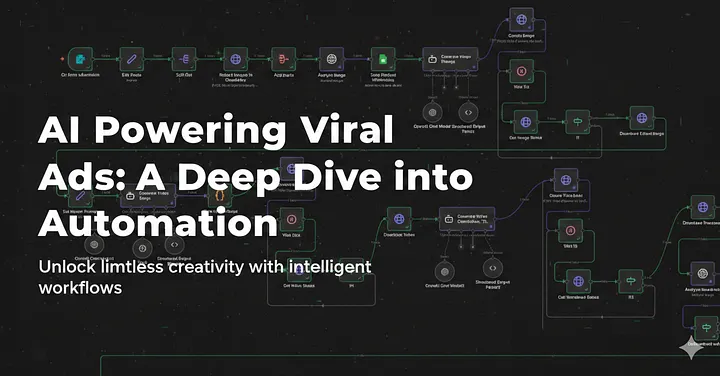
Building an AI-Powered Ad Generation System for Businesses 💸
An end-to-end n8n workflow that turns a product name, description, and a couple of photos into a fully edited, titled, thumbnailed video ad — uploaded straight to YouTube, no manual editing.
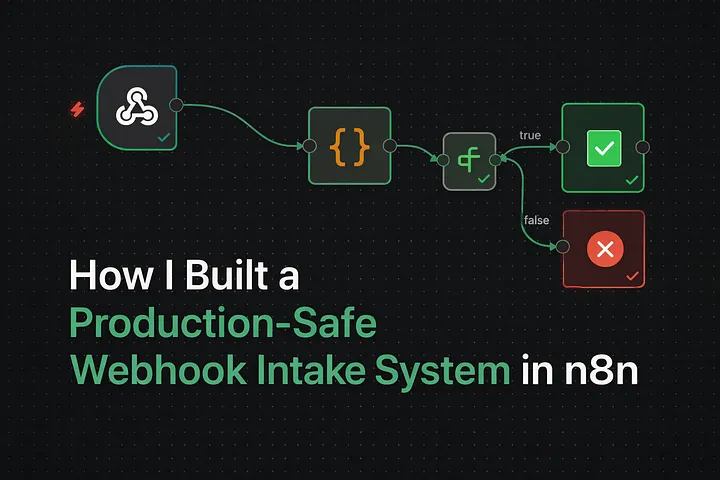
How I Built a Production-Safe Webhook Intake System in n8n
Why most automations fail before AI or CRMs ever get involved — and the defensive n8n webhook pattern that stops bad data at the door: validate, normalize, respond deterministically, no silent failures.